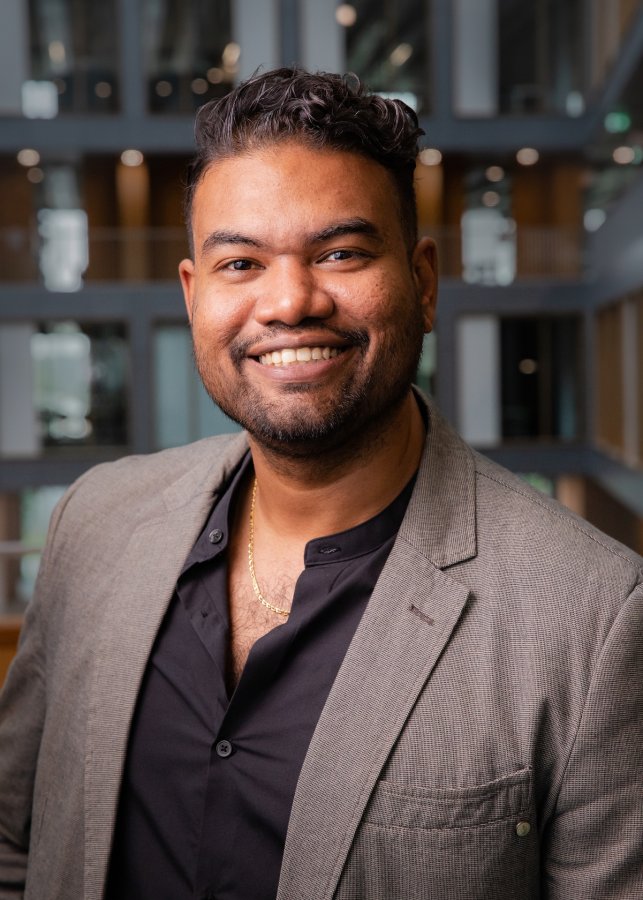
Durwin Lynch is currently a lecturer-researcher affiliated with the Athena Institute of the Vrije Universiteit Amsterdam and is also the program coordinator for the master's program ‘Management Policy Analysis and Entrepreneurship in the Health and Life Sciences’. He conducts research into effective and meaningful citizen participation in the transformation towards more sustainable and inclusive societies. Within the research group Re/Presenting Europe: Healing Afterlives of Colonialism, he explores (1) the integration of complementary care into the Dutch healthcare system, (2) ‘healing’ from the childcare benefits scandal, (3) sense of belonging among Dutch Caribbean students in the Netherlands, and (4) how complex collaborations between academia and civil society organizations can be improved.
Like many ‘island children’, Durwin moved from Curacao to the Netherlands to continue his studies and subsequently stayed. Durwin has been involved in volunteer/mentor work for Dutch Caribbean students in the Netherlands for over 20 years. At the first Dutch Caribbean Research week (2021) he met Tanja Fraai, director of Stichting WeConnect and realized that they had a shared interest to address the mental health of Dutch Caribbean students in response to the concerning report of the National Ombudsman in 2020.
Dutch Caribbean (DC) students face challenges in the racialized Dutch educational context that negatively affect their mental wellbeing and study success. To address this issue, this study aimed to develop need-based intervention(s) to foster resilience and sense of belonging among DC students. A Participatory Action Research (PAR) approach was used to develop and implement five reflexive workshops and one impact event over three years to foster and improve individual and community resilience among DC students. The interventions provided reflexive and healing spaces for students to share racialized experiences, feel connected, and (re)build a sense of self and community. The study revealed diverse experiences of exclusion and discrimination, as well as strategies to remedy these. More culturally appropriate interventions were recommended to empower DC students to connect and cope with their emotions and foster resilience. The findings warrant the need for more safe reflexive spaces for racialized students to connect, share experiences, and build both personal and communal resilience – as anti-racist transformative praxis.
The study was published in Journal of Ethnic and Racial Studies and can be read/downloaded here.
During the presentation for the DCRW2026 Durwin will be joined by Tanja Fraai, former director of Stichting WeConnect, with whom the research was carried out.